Stonger Together: Beyond Hispanic Heritage Month
In her latest column, Rev. Fabiola Grandon-Mayer reflects on the Northern Illinois Conference’s Hispanic/Latinx ministries and the importance of celebrating and supporting these…
May 1 is internationally recognized as May Day, a day to lift up voices in the struggle for labor rights.
The first May Day observation in Chicago took place in 1886, led by labor activists Albert and Lucy Parsons. Some 80,000 workers went on strike and marched down Michigan Avenue to call for an eight-hour workday. They chanted, “eight hours for work, eight hours for rest, eight hours to do what we will!” The strike, marches, and rallies continued peacefully until May 3, when Chicago police killed workers on strike at the McCormick Harvesting Machine Company.
A rally on May 4 at Haymarket Square became one of the most consequential moments of labor history. The last speaker at the rally was Samuel Fieldan, an immigrant and Methodist Episcopal Church lay speaker. As the speeches concluded and police arrived, someone threw a bomb. In the ensuing chaos, seven police officers and four to eight civilians died; many others were wounded.
Though no one ever discovered who threw the bomb, eight workers, including Samuel Fielden, were arrested, tried, and sentenced to death for inciting a riot (Samuel’s sentence was commuted six years later). At his trial, Samuel defended his actions and spoke of his work in the church, saying, “I thought that that religion, which I thought I professed and which was calculated to better the world, was something that was worthwhile for me to use my energies in propagating; and I did it. I could not help it.”
Samuel stood in the long tradition of Wesleyans in the Labor movement. Born with John Wesley’s care for coal miners and oppressed workers, United Methodists fought against child labor in the early 1900s and for fair wages in the civil rights movement in the 1950s. In fact, the first MEC Social Creed in 1908 dealt exclusively with labor practices.
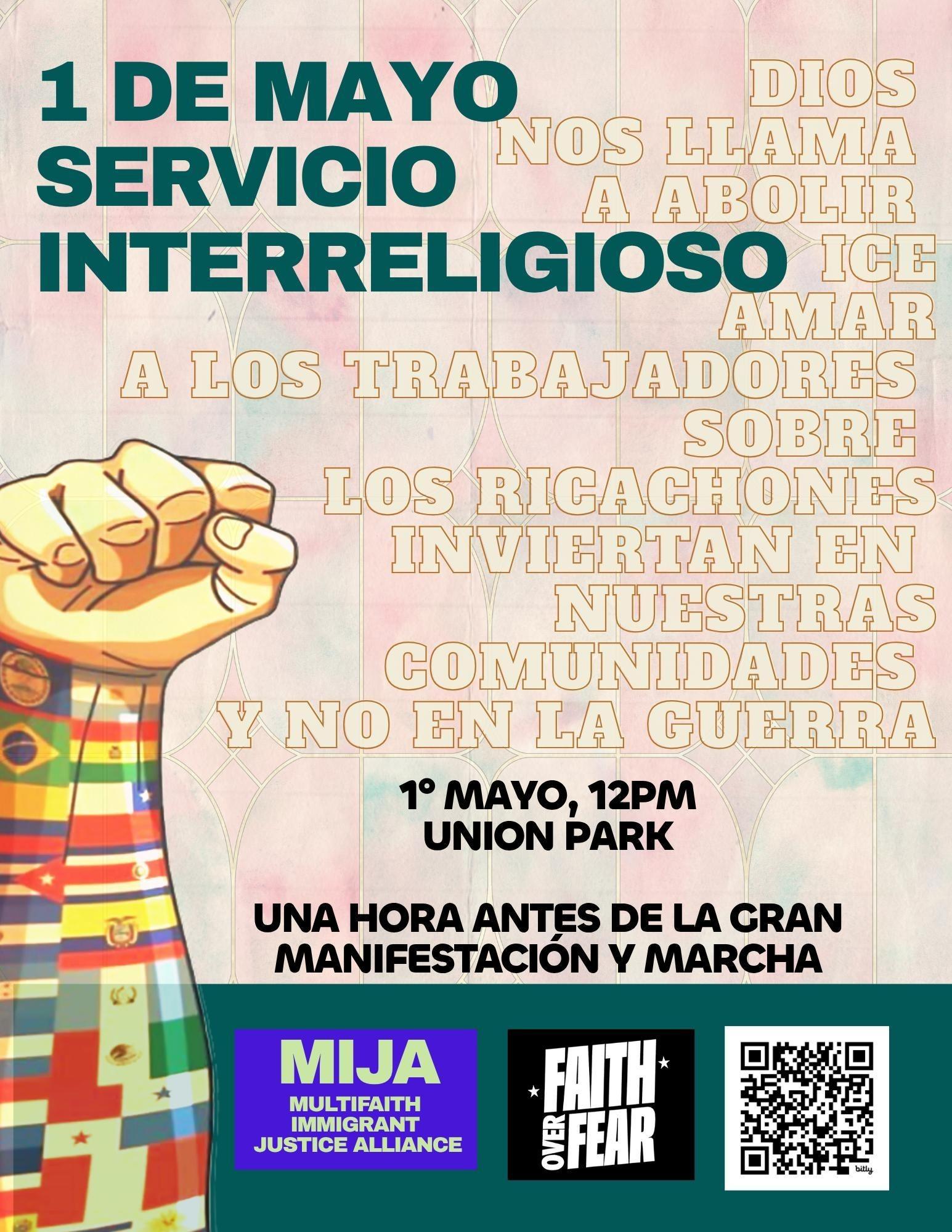
May Day has long been about workers, and most often immigrant workers, using their collective power for the collective good of the people. This year on May 1, thousands of people will gather at Union Park in Chicago to protest the violence of American empire at home and abroad. (Find more information here.) We will use our collective power to call for the abolition of ICE, support workers over billionaires, and fund community, not war. Continuing in Samuel Fieldan’s witness, we are compelled by our religion to better the world, we cannot help it.
In her latest column, Rev. Fabiola Grandon-Mayer reflects on the Northern Illinois Conference’s Hispanic/Latinx ministries and the importance of celebrating and supporting these…
United Methodists and Muslim neighbors gathered Oct. 13 at Barrington United Methodist Church for the annual Methodist-Muslim Dinner, themed “Hope in Action: Standing Together Against Hate and…
The Northern Illinois Conference is accepting Equitable Compensation applications for the final 2026 disbursement and for the 2027 grant cycle. Churches and charges with a full-time…
Facebook business-page changes may affect how NIC churches share links to external websites, event registrations and ministry resources. Learn how your church can adapt its…