In Sympathy: Man Singh Das
Rev. Man Singh Das, a retired member of the Northern Illinois Conference, passed away on October 7, 2026.
The pilgrimage doesn’t end when the journey is over. The Pilgrimage Reflection Prayer Booklet features prayers written by participants, inviting readers to reflect on the trip's stories, history, and lessons. May these prayers inspire you to seek justice, extend mercy, and continue walking with God.
From June 25 to 28, I had the blessed opportunity to join members from the Northern Illinois, Illinois Great Rivers, and Wisconsin Conferences on a spiritual pilgrimage organized by the NIC Committee on Religion and Race to see historical places in Illinois and learn about our state's history through the lens of its diverse peoples.
We began our journey at Greenstone United Methodist Church in Chicago’s Pullman Historical District. The church and the surrounding community were built by railroad industrialist George Pullman in 1882. The church, whose name came from its unique green stone, served as a worship and communal gathering place for the workers in Pullman’s passenger railroad car factories. In 1894, during the strike, the church stood as a symbol for justice, with its pastor and congregation advocating for the workers’ rights. Pastor Luther C. Mason, who showed us around the church, called the Pullman community the birthplace of Labor Day as a federal holiday.
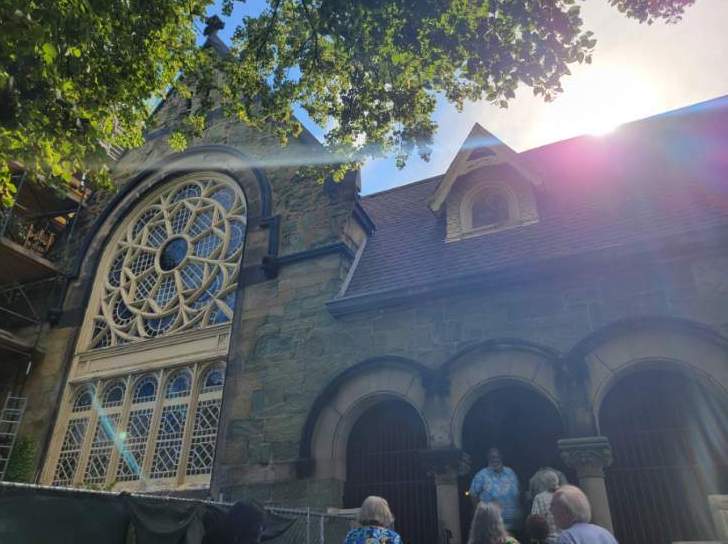
Greenstone United Methodist Church, a spiritual center in the Pullman District.
From Greenstone we walked to Pullman National Historical Park, where we learned more about the role of the labor movement in the lives of Pullman porters and maids, African-American workers who served long, grueling hours on trains, sometimes getting as little as 50 minutes of sleep a day, and whose pay was cut short by Pullman during a financial panic in the 1890s. These brave men and women led the strike for workers’ rights, one that was bloody and violent, but eventually paved the way for unionization.
Pastor Mason led us through South Side neighborhoods, pointing out various murals that told stories about the African-Americans who built the communities. Despite the sin of real-estate discrimination through redlining (the denial of financial services to residents of certain neighborhoods based on racial or ethnic composition), hope and pride were built.
Eventually, we arrived at the Obama Presidential Center, where we explored the grounds and saw the close connections the center has with the city—the Chicago Public Library in particular, which shares a branch on the museum’s campus. After a delicious meal in Chinatown, we visited Grant Park. We spoke with Dorene Wiese, who told us about the indigenous people who called this portion of Illinois home. She mentioned Chicago’s “first lady,” Kitihawa Point DuSable, a Potawatomi woman who, with her husband Jean Baptiste Point du Sable, established the first permanent settlement in what is now the city of Chicago.
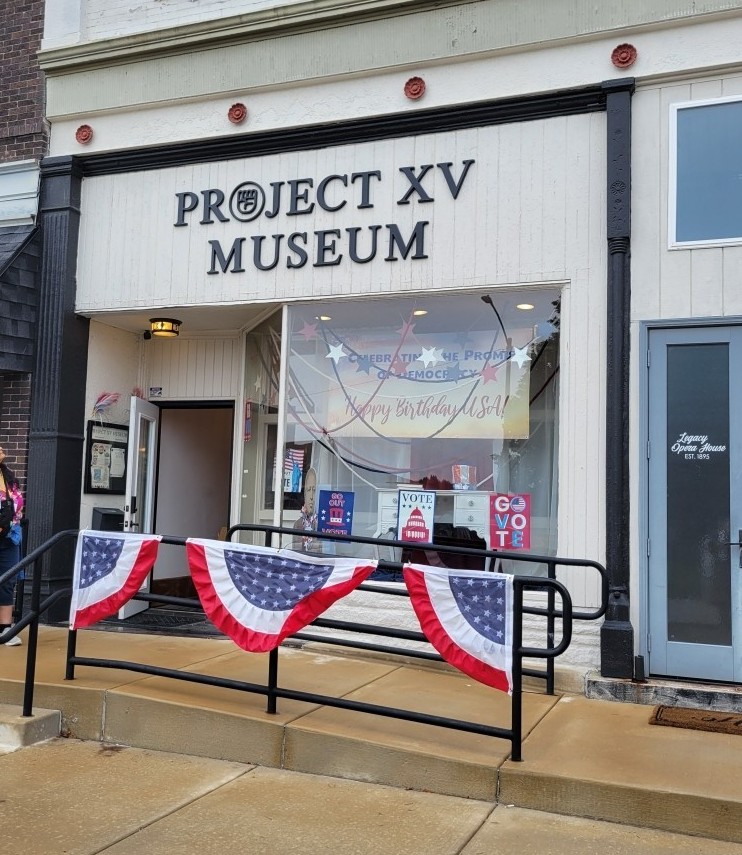
Project XV Museum, which promotes the 15th Amendment to the U.S. Constitution.
We stopped in the Pilsen neighborhood to visit the National Museum of Mexican Art before having dinner with members from Humboldt Park United Methodist Church. They not only offered wonderful hospitality (and delicious food) but also talked about the justice work they are doing to help immigrant families.
The following day, we gathered at the campus of North Central College, where Chaplain Max Blalock shared some history about the college, particularly the time when Rev. Dr. Martin Luther King Jr. visited. He spoke from the pulpit that continues in use in the school’s chapel. Three busloads of students, faculty, and staff had traveled south from there to participate in the civil-rights movement.
We then boarded a bus ourselves and traveled to Ottawa, Ill., where we heard from several local historians. We visited the square where Abraham Lincoln and Stephen Douglas held the first of their seven debates.
We then traveled further south to El Paso, Ill., to visit the Project XV Museum. Named after the 15th Amendment, the museum is dedicated to the history of voting rights in our nation. It is housed in the building of barber David Strother, who was the first African-American to vote in Illinois.
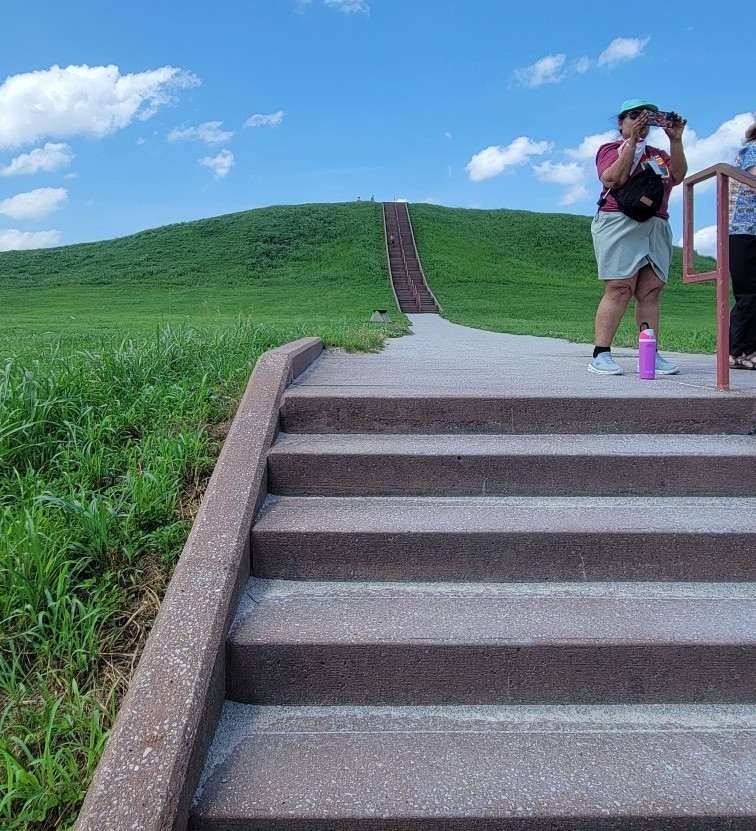
Pilgrims climbed the Cahokia Mounds.
On Saturday, we explored Springfield, beginning with a visit to the Abraham Lincoln Presidential Library and Museum, learning not only about Lincoln’s life, but also about the history of the slave trade, emancipation, and the contributions of African-Americans and women in the Union’s efforts in the Civil War.
We paid our respects at Lincoln’s tomb and then visited the Springfield and Central Illinois African-American History Museum. It opened our eyes to history that is sometimes glossed over. Until that day, I confess I was unaware of the 1908 Springfield Race Riot.
On the last day of our pilgrimage, we traveled to Collinsville, Ill. After joining the people of Trinity UMC of East St. Louis for worship and lunch, we learned about the first people of Illinois who once called that region home and visited the ancient Cahokia Mounds, a UNESCO World Heritage Site and the largest pre-Columbian site north of Mexico. Despite the 100-degree heat index, we ventured to the tallest mound and tried to imagine what that place must have been like all those years ago.
History is not always kind. But it is necessary to learn, as it is a means to grow. I am very grateful for this trip and urge everyone to seek opportunities to travel, engage, and learn about this land we call home.
Read the reflection on the trip by Bishop Kennetha Bingham-Tsai. who also attended.
Rev. Man Singh Das, a retired member of the Northern Illinois Conference, passed away on October 7, 2026.
Four leaders from the Northern Illinois-Wisconsin Episcopal Area will participate in the Council of Bishops’ Leadership Gathering Oct. 20–24 in Calgary, Canada, joining United Methodis…
The 2026 Bishop’s Appeal: Education for the Central Conferences raised $32,247.40 to expand educational opportunities in Tanzania and support theolo…
United Voices for Children brought advocates, church leaders and community partners together for its annual Raising Our Voices event on Sept. 24 at Grace UMC in Rockford, focusin…